
Overview
That frustrating moment when your car refuses to start in the morning typically stems from battery issues (60% of cases), fuel system problems, ignition failures, or weather-related factors that become more pronounced after overnight sitting. Understanding these common culprits allows for systematic troubleshooting and preventive maintenance—from regular battery checks and using the right oil viscosity to maintaining fuel systems and following manufacturer-recommended service schedules—that can save you from unexpected repair bills and early-morning headaches.
Table of Contents
- Understanding Morning Starting Issues
- Common Causes of Hard Starting
- Battery Problems
- Fuel System Issues
- Ignition System Concerns
- Weather-Related Factors
- Diagnosing the Problem Yourself
- Preventive Maintenance Tips
- When to Seek Professional Help
- Conclusion
- Frequently Asked Questions
Understanding Morning Starting Issues
If you’re wondering why is my car hard to start in the morning, you’re not alone. After 25 years of fixing vehicles, I’ve seen this problem countless times, especially during seasonal changes. That moment when you turn the key and hear a slow crank instead of the usual purr can be concerning, but understanding what’s happening is the first step toward fixing it without draining your wallet.
Morning starting issues typically occur because several vehicle systems are at their most vulnerable after sitting overnight. During this period, temperatures drop, fluids thicken, and electrical components cool down—creating a perfect storm of conditions that can make your engine reluctant to fire up. The good news is that most of these problems have straightforward solutions that don’t require extensive mechanical knowledge or expensive repairs.
Let’s break down the common culprits behind those frustrating morning struggles and explore practical solutions that can save you from costly repair bills. By identifying the root cause, you can often resolve the issue with simple maintenance rather than major repairs.
Common Causes of Hard Starting
When diagnosing a car that’s stubborn to start in the morning, I typically look at several key systems. These issues don’t always announce themselves with warning lights or obvious symptoms, which is why morning starting problems often catch owners by surprise.
The most frequent causes fall into a few main categories:
- Battery and electrical system issues
- Fuel delivery problems
- Ignition system malfunctions
- Weather-related factors
- Engine sensor failures
Each of these areas presents different symptoms and requires specific diagnostic approaches. Understanding which system is likely at fault can help you address the problem efficiently and economically.
In my experience, about 60% of morning starting difficulties stem from battery-related issues, while the remaining 40% are distributed among the other systems. Let’s explore each of these potential culprits in detail to help you pinpoint your specific situation.

Battery Problems
The battery is often the primary suspect when your car struggles to start in the morning. After overnight cooling, a battery’s chemical reactions slow down, reducing its available power just when your engine needs it most. This effect becomes more pronounced as batteries age and lose capacity.
Signs of a battery issue include:
- Slow cranking when you turn the key
- Dashboard lights that dim during starting attempts
- A clicking sound instead of engine cranking
- Electronic systems that reset or function poorly
Most automotive batteries last between 3-5 years, depending on climate and driving habits. If yours is approaching this age range, it’s worth testing your battery voltage with a multimeter. A healthy battery should read about 12.6 volts when the engine is off and 13.7 to 14.7 volts when running.
Corrosion on battery terminals can also prevent proper current flow. White or greenish buildup at the connection points indicates corrosion that should be cleaned with a mixture of baking soda and water. Once cleaned, applying a thin layer of petroleum jelly can help prevent future corrosion.
Another common issue is parasitic drain—electrical components drawing power when the vehicle is off. Modern cars have numerous systems that maintain minimal power usage, but excessive drain can deplete your battery overnight. If your battery tests fine but still goes flat regularly, a parasitic drain test might be necessary.
Beyond the battery itself, check the alternator, which recharges your battery while driving. An underperforming alternator won’t fully recharge the battery during normal driving, creating a progressive decline in starting ability.
Fuel System Issues
When your car sits overnight, fuel system problems often become more apparent in the morning. Modern fuel-injected engines rely on precise pressure to atomize fuel properly for combustion, and any disruption to this system can cause hard starting.
The fuel pump creates the necessary pressure to deliver gasoline from your tank to the injectors. A weakening pump may still function adequately once the engine is running but struggle to build initial pressure after sitting overnight. Listen for the pump’s brief humming sound when you turn the key to the “on” position before cranking. No sound could indicate a failing pump.
Fuel injectors can develop deposits that restrict spray patterns, particularly with lower-quality gasoline. These deposits build up gradually, affecting cold-start performance before causing noticeable drivability issues. Using a quality fuel system cleaner every 3-6 months can help prevent this buildup and improve starting performance.
In colder climates, fuel line condensation can lead to water in the fuel system. When temperatures drop overnight, this water can freeze, blocking fuel flow. Adding a fuel stabilizer during winter months can help prevent this issue by binding with water molecules and allowing them to be burned during combustion.
The fuel pressure regulator maintains the correct pressure throughout the system. A failing regulator typically causes hard starting and rough running immediately after starting. Once the engine warms up, symptoms often diminish, making morning starts particularly troublesome.
If your vehicle has a carburetor rather than fuel injection, the choke mechanism might be the culprit. The choke restricts airflow when the engine is cold, creating a richer fuel mixture needed for cold starting. A stuck or misadjusted choke can prevent proper starting in the morning.
Ignition System Concerns
The ignition system creates the spark that ignites your fuel-air mixture, and any weakness in this system becomes more apparent during a cold start. Spark plugs endure extreme conditions—from freezing temperatures to thousands of volts and combustion temperatures exceeding 1,000 degrees.
Worn spark plugs require more voltage to create an adequate spark, particularly in cold weather when more energy is needed. If your plugs haven’t been changed according to the manufacturer’s schedule (typically 30,000-100,000 miles depending on the type), they might not provide sufficient spark for easy morning starts.
Spark plug wires, coil packs, or ignition coils transfer high voltage to the plugs. Any deterioration in these components can reduce spark energy. Moisture accumulation overnight can exacerbate existing weaknesses, causing difficult morning starts even when the components work fine later in the day.
The crankshaft position sensor tells your engine’s computer when to fire each cylinder. A failing sensor may work inconsistently, particularly at the lower cranking speeds typical of morning starts. This can cause extended cranking before the engine fires or prevent starting altogether.
Modern engines use multiple sensors to optimize starting, including temperature sensors that adjust fuel delivery based on engine temperature. A malfunctioning coolant temperature sensor might incorrectly signal a warm engine condition, reducing fuel delivery when a richer mixture is actually needed for cold starting.
Fixing starting problems related to the ignition system often requires diagnostic equipment to identify the specific component at fault, but visual inspection can sometimes reveal obvious issues like cracked spark plug wires or corroded connections.
Weather-Related Factors
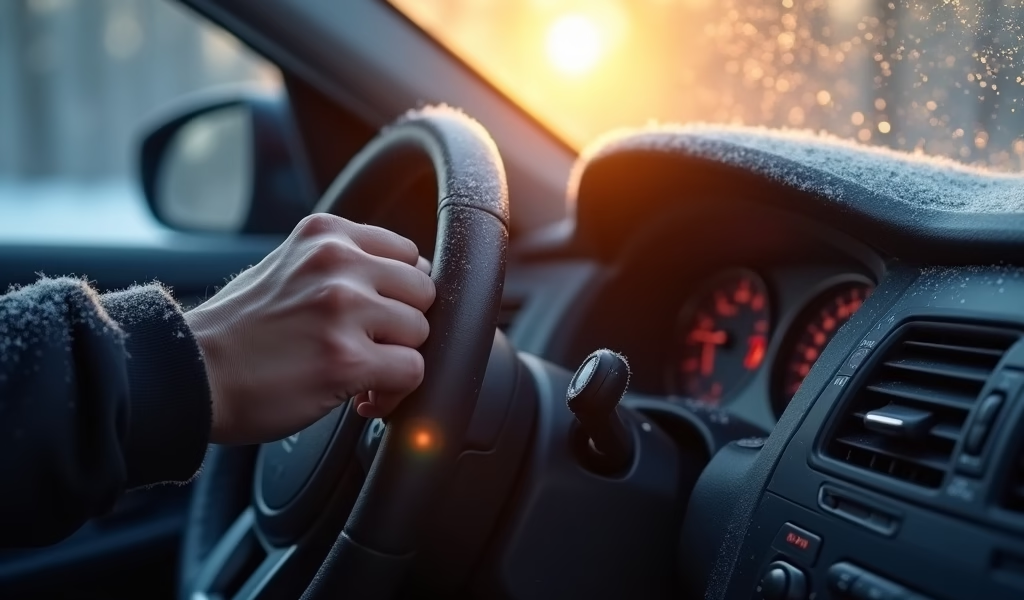
Environmental conditions play a significant role in how your vehicle starts, particularly in extreme temperatures. Cold weather thickens engine oil, increasing resistance to initial cranking. This higher viscosity means your starter motor works harder to turn the engine, drawing more current from an already cold-weakened battery.
In regions where temperatures regularly drop below freezing, using the correct oil viscosity becomes crucial. Modern synthetic oils flow better at low temperatures than conventional oils, reducing starting resistance. Your owner’s manual specifies the appropriate oil weight for your climate—many recommend 5W-20 or 0W-20 for cold weather operation.
Moisture also impacts starting ability. High humidity or precipitation can create condensation on electrical components, potentially causing short circuits or reduced conductivity. Engine compartments aren’t completely sealed, allowing moisture to settle on spark plug wires, distributor caps, or electronic connections.
Extreme heat presents different challenges. Hot weather can cause fuel to vaporize in the lines, creating vapor lock that prevents proper fuel delivery. This typically causes hard starting after the engine has been running and then shut off while still hot, rather than first-thing-in-the-morning problems.
According to research from the National Renewable Energy Laboratory, vehicle starting systems experience up to 60% more stress in sub-freezing temperatures compared to moderate conditions. This helps explain why marginal components often fail during the first cold snap of winter.
If you live in an area with seasonal temperature extremes, consider these preventive measures:
- Use a battery blanket or engine block heater in very cold climates
- Park in a garage when possible to moderate temperature fluctuations
- Keep your gas tank at least half-full during winter to prevent condensation
- Consider a battery with higher cold-cranking amps (CCA) rating for cold climates
Diagnosing the Problem Yourself
Before heading to a repair shop, you can perform some simple diagnostic steps to narrow down the cause of your morning starting issues. This approach can save you money and provide valuable information if professional service becomes necessary.
Start by carefully observing the symptoms when you attempt to start your car in the morning:
- If you hear rapid clicking, the battery likely has insufficient charge to engage the starter
- If the engine cranks slowly, suspect battery, starter, or excessive engine resistance
- If it cranks normally but doesn’t start, focus on fuel or ignition systems
- If it starts but runs roughly until warmed up, look at temperature-sensitive components
For battery testing, a digital multimeter provides the most accurate results. Measure voltage with the engine off (should be 12.4-12.6V), during cranking (should stay above 9.5V), and with the engine running (13.5-14.5V). Significant deviations from these ranges indicate specific system problems.
To check for fuel pressure issues, listen for the fuel pump’s brief whirring sound when you turn the key to the “on” position without cranking. No sound could indicate a pump problem, while a normal sound followed by starting failure points toward other fuel system components.
Spark testing requires basic tools but can provide valuable information. Remove a spark plug, reconnect it to its wire or coil, ground the plug against the engine, and have someone crank the engine while you observe for a strong, blue spark. Weak or absent spark narrows the focus to ignition components.
For more advanced diagnosis, consider investing in an OBD-II scanner. Even basic models can read engine codes that might not be serious enough to illuminate your check engine light but could still affect starting performance.
Preventive Maintenance Tips
Preventing morning starting issues is far easier and less expensive than repairing them after they occur. Implementing these maintenance practices can significantly reduce your chances of encountering that frustrating moment when your car refuses to start.
Regular battery care should be your priority, as it’s the most common failure point. Keep terminals clean and connections tight. Every six months, inspect for corrosion and clean as needed. Battery testing should be performed annually, especially before extreme weather seasons.
Maintain your fuel system by using quality gasoline from reputable stations. Consider adding a fuel system cleaner to your tank every 5,000 miles or before seasonal changes. Replace the fuel filter according to your manufacturer’s schedule—typically every 30,000 to 50,000 miles.
For the ignition system, follow the recommended replacement intervals for spark plugs—typically every 30,000 to 100,000 miles depending on the type. During replacement, inspect plug wires, coils, and other ignition components for signs of wear or damage.
Oil changes are crucial not just for engine longevity but for starting performance as well. Fresh oil with the correct viscosity reduces cranking resistance. Follow your manufacturer’s recommendations but consider more frequent changes if you make primarily short trips or live in extreme climates.
Here’s a simple maintenance schedule to prevent morning starting issues:
- Monthly: Check battery connections and fluid levels (if applicable)
- Quarterly: Inspect belts and hoses for cracks or wear
- Semi-annually: Clean battery terminals and test battery condition
- Annually: Have starting and charging systems professionally tested
- According to schedule: Replace spark plugs, fuel filters, and air filters
Keeping detailed maintenance records helps you track when components might be approaching the end of their service life. This proactive approach allows you to replace items before they fail completely, avoiding those inconvenient morning surprises.
When to Seek Professional Help
While many starting issues can be diagnosed and resolved at home, certain situations warrant professional attention. Recognizing these scenarios can save you time, prevent further damage, and sometimes even protect your safety.
If your vehicle cranks but won’t start despite checking basic components, the problem likely involves complex systems requiring specialized diagnostic equipment. Modern vehicles have sophisticated engine management computers that need professional scanners to access their full diagnostic capabilities.
Intermittent problems are particularly challenging to diagnose without proper equipment. If your car sometimes starts normally and other times struggles, a technician can connect monitoring equipment to capture data during the failure, pinpointing the exact cause.
Safety concerns arise with certain starting problems. Fuel leaks, burning smells, or smoke during starting attempts require immediate professional attention. These symptoms could indicate dangerous conditions that might lead to fire or other hazards.
When selecting a repair shop, look for ASE-certified technicians with experience in electrical and starting system diagnosis. Independent shops often provide more personalized service and better value than dealerships for these types of repairs.
Be prepared to provide detailed information to your mechanic:
- When the problem first occurred
- Whether it happens every morning or only under certain conditions
- Any unusual sounds, smells, or behaviors during starting attempts
- Recent changes in driving patterns or maintenance
- Whether the problem improves once the engine warms up
This information helps technicians focus their diagnostic efforts efficiently, potentially reducing your repair costs and ensuring the actual problem is addressed rather than just symptoms.
Conclusion
Morning starting difficulties can be frustrating, but understanding the likely causes empowers you to address them effectively before they escalate into major repairs. Whether your car is experiencing a battery issue, fuel system problem, ignition failure, or environmental challenges, the systematic approach outlined in this guide can help you identify and resolve the root cause.
Remember that preventive maintenance is your best defense against unexpected starting problems. Regular attention to your battery, fuel system, and ignition components can prevent most common starting issues before they leave you stranded. Following the manufacturer’s maintenance schedule and adapting it to your specific driving conditions and climate will maximize your vehicle’s reliability.
When diagnosing why your car is hard to start in the morning, patience and observation are key. Taking note of specific symptoms and when they occur provides valuable clues that can lead to an accurate diagnosis, whether you’re handling the repair yourself or seeking professional assistance.
By approaching the problem methodically and investing in appropriate preventive measures, you can enjoy confident morning starts regardless of season or weather conditions—and avoid those unexpected repair bills that so often accompany starting failures.
Frequently Asked Questions
Can a dying battery still crank the engine but cause hard starting?
Yes, a weakened battery might have enough power to turn the engine but insufficient voltage to properly operate fuel injectors and ignition systems. This results in extended cranking before starting.
Why does my car start fine after it warms up but struggles in the morning?
Temperature-sensitive components like sensors and fuel delivery systems often function poorly when cold but improve with warmth. Cold oil also creates more resistance for the starter to overcome.
How often should I replace my battery to prevent morning starting problems?
Most automotive batteries last 3-5 years, depending on climate and usage patterns. Consider proactive replacement after 4 years, especially before winter in colder regions.
Can using my phone charger overnight drain my car battery enough to cause starting problems?
Modern phone chargers typically draw minimal power when the phone isn’t connected. However, multiple accessories or a charger with a design flaw could contribute to battery drain overnight.
Is it normal for diesel engines to be harder to start in cold mornings than gasoline engines?
Yes, diesel engines rely on compression heat rather than spark for ignition, making them inherently more difficult to start in cold weather. Many diesel vehicles include glow plugs or block heaters to address this characteristic.