
Overview
When your engine mysteriously revs by itself, it’s likely due to one of seven common culprits including a dirty throttle body, vacuum leaks, or faulty sensors—problems that often start as minor annoyances but can lead to costly repairs if ignored. The good news is that many of these issues can be diagnosed through simple observations and fixed with basic maintenance procedures, though persistent symptoms accompanied by warning lights or strange noises warrant professional attention to prevent more serious engine damage.
Table of Contents
- Understanding Engine Revving: What’s Normal and What’s Not
- 7 Common Causes of Self-Revving Engines
- Diagnosing the Issue: How to Identify Why Your Engine is Revving
- Simple Fixes You Can Try Before Heading to the Mechanic
- When to Seek Professional Help: Warning Signs You Shouldn’t Ignore
- Preventing Future Problems: Maintenance Tips to Keep Your Engine Happy
- Cost Considerations: What You Might Pay for Repairs
- Conclusion: Taking Control of Your Engine’s Behavior
- Frequently Asked Questions
Understanding Engine Revving: What’s Normal and What’s Not
Have you ever been sitting at a stoplight, foot firmly on the brake, when suddenly your engine revs by itself? That unexpected surge in RPMs can be both startling and concerning. As a mechanic with 15 years under my belt, I can tell you that why does my engine rev by itself is one of the most common questions I hear in the shop.
Let’s start with what’s normal. Modern vehicles are designed to maintain a consistent idle speed—typically between 600-1000 RPM depending on your car’s make and model. This idle is controlled by your engine’s computer, which constantly adjusts air and fuel delivery to maintain that perfect purr.
But when your engine suddenly decides to rev without your foot touching the gas pedal, something’s definitely amiss. This isn’t just annoying—it could signal an underlying issue that might lead to costly repairs if ignored.
What we’re talking about here is called “surging idle” or “hunting idle” in mechanic-speak. Your engine is literally hunting for the right RPM but can’t seem to find it. The tachometer needle bounces up and down, and you might feel the car wanting to lurch forward even though you’re not giving it any gas.
This isn’t just a quirk to live with—it’s your car telling you something needs attention. The good news? Many of the causes are fixable without breaking the bank, especially if caught early.
7 Common Causes of Self-Revving Engines
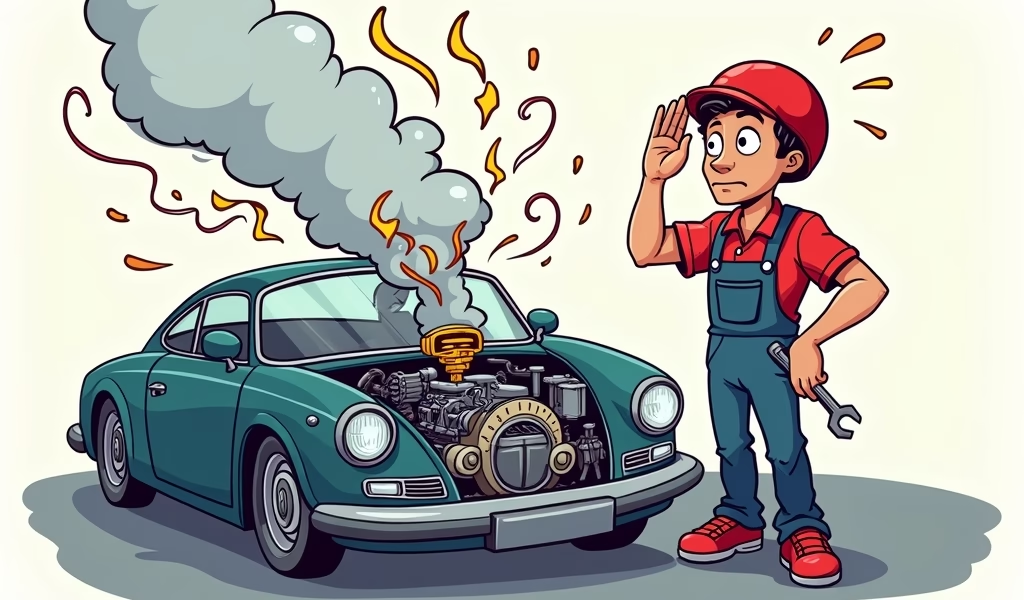
When your engine revs by itself, several culprits could be to blame. Understanding these common causes can help you communicate better with your mechanic or even tackle some fixes yourself.
1. Dirty Throttle Body: The throttle body controls how much air enters your engine. Over time, carbon deposits build up inside, preventing it from closing completely. This allows extra air into the engine, causing unexpected revving. Think of it like trying to whisper with something stuck in your throat—impossible to control the volume.
2. Vacuum Leaks: Your engine’s intake system is sealed with various hoses and gaskets to maintain proper vacuum pressure. When these develop cracks or loose connections, unmetered air sneaks into the engine, throwing off the air-fuel ratio. This is among common engine faults that can cause erratic idling and self-revving.
3. Faulty Idle Air Control Valve: This valve works with your car’s computer to maintain the correct idle speed. When it malfunctions, your engine might rev unpredictably. It’s like having a faulty thermostat in your house that can’t decide on a temperature.
4. Mass Airflow Sensor Issues: This sensor measures incoming air and tells the engine computer how much fuel to inject. When dirty or failing, it sends incorrect signals, causing your engine to compensate incorrectly. According to a study by AAA, faulty sensors account for nearly 20% of check engine light activations.
5. Worn Throttle Position Sensor: This sensor tells your car’s computer how far you’re pressing the gas pedal. When it starts sending erroneous signals, your engine might think you’re pressing the gas when you aren’t.
6. EGR Valve Problems: The Exhaust Gas Recirculation valve reduces emissions by recycling exhaust gases. A stuck EGR valve can cause irregular idle speeds and unexpected revving.
7. Computer/ECU Issues: Sometimes the problem isn’t mechanical but electronic. Your engine control unit might need a software update or have developed a glitch causing incorrect idle speed commands.
Understanding which of these issues might be affecting your vehicle is the first step toward an effective solution. Many modern drivers use a engine diagnostic app to get initial insights before visiting a professional.
Diagnosing the Issue: How to Identify Why Your Engine is Revving
Before you can fix a self-revving engine, you need to pinpoint what’s causing it. While professional diagnostics are sometimes necessary, there are several observations you can make to narrow down the possibilities.
First, note when the revving occurs. Does it happen only when the engine is cold? Only when it’s warm? Or does it happen regardless of temperature? Cold-only revving often points to vacuum leaks or sensor issues that correct themselves as the engine warms up. Warm-only problems might indicate a failing component that’s affected by heat expansion.
Next, listen carefully to your engine. A whistling or hissing sound accompanying the revving strongly suggests a vacuum leak. These leaks often sound more pronounced when the engine is cold.
Pay attention to whether the revving happens in patterns or randomly. Rhythmic revving might indicate a sensor that’s sending cyclical bad data, while random surges could suggest intermittent electrical issues or a mechanical problem like a sticking throttle plate.
Also note if any warning lights are illuminated on your dashboard. The check engine light can be your best friend here. Most auto parts stores will scan your vehicle’s computer for free, giving you valuable error codes that can point directly to the problem. Research from CarMD shows that addressing check engine lights promptly saves an average of $125 in additional repairs.
If you’re comfortable looking under the hood, inspect visible vacuum lines for cracks, splits, or disconnections. These rubber hoses tend to deteriorate with age and heat exposure. Check around the intake manifold and throttle body especially.
For the more technically inclined, observing your vehicle’s short-term and long-term fuel trim values with an OBD-II scanner can provide insights. Consistently high positive numbers suggest the computer is adding fuel to compensate for a lean condition—often caused by unmetered air entering through a leak.
Simple Fixes You Can Try Before Heading to the Mechanic
Before you resign yourself to an expensive repair bill, there are several DIY solutions worth trying. These approaches address the most common causes of self-revving engines and require minimal tools or technical knowledge.
First, try cleaning your throttle body. This simple maintenance task can often resolve revving issues caused by carbon buildup. You’ll need throttle body cleaner spray (available at any auto parts store) and some basic tools. After disconnecting the battery, remove the air intake duct to access the throttle body, spray the cleaner onto a cloth (never directly into the throttle body), and gently clean the throttle plate and surrounding area.
Another easy fix is checking and securing vacuum hoses. Inspect all visible vacuum lines for cracks or loose connections. Sometimes simply reconnecting a popped-off hose can solve your revving problem instantly. Replacement vacuum hoses are inexpensive if you find any that are damaged.
If your vehicle has been sitting unused for some time or uses fuel with ethanol (most pump gas), try using a fuel system cleaner. Modern fuel systems can develop gummy deposits that affect fuel delivery precision. A quality fuel system cleaner can help dissolve these deposits, potentially resolving irregular idle issues.
For vehicles with high mileage, check and clean your mass airflow sensor. This sensitive component gets dirty over time, causing it to send inaccurate readings. Most MAF sensors can be cleaned carefully with specialized MAF cleaner spray—just be sure not to touch the delicate sensing elements.
Finally, check if your vehicle has any technical service bulletins (TSBs) related to idle issues. Manufacturers often release updates for engine control modules to address known problems. Some dealerships will perform these updates for free, even on out-of-warranty vehicles.
While these DIY approaches won’t fix every self-revving situation, they address many common causes and might save you hundreds in diagnostic fees and repairs. Just remember to disconnect your battery before working on electrical components, and if you’re unsure about any procedure, it’s best to consult with a professional.
When to Seek Professional Help: Warning Signs You Shouldn’t Ignore
While DIY solutions can resolve many cases of self-revving engines, certain symptoms indicate it’s time to seek professional assistance. Knowing when to call in the experts can prevent minor issues from escalating into major repairs.
If your engine’s revving is accompanied by a significant drop in fuel economy, this suggests your vehicle is consuming excess fuel—a situation that could damage your catalytic converter over time. Modern converters can cost $1,000+ to replace, making timely intervention crucial.
When engine revving occurs alongside stalling or hesitation during acceleration, you’re dealing with a problem that affects driveability and potentially safety. This combination often indicates more complex fuel delivery or ignition system issues that require professional diagnostic equipment.
If you’ve tried basic maintenance solutions and the problem persists or worsens, professional diagnosis becomes necessary. Continuing to drive with unresolved revving issues can lead to accelerated wear on engine components.
When multiple warning lights illuminate on your dashboard—especially the check engine light combined with others like battery, traction control, or ABS—there could be a more serious electrical system problem affecting multiple vehicle systems. These integrated issues typically require dealer-level diagnostic tools.
Strange noises accompanying the revving, particularly metallic sounds, grinding, or knocking, demand immediate professional attention. These sounds can indicate internal engine damage that will only worsen with continued operation.
If your vehicle is still under warranty, take advantage of covered diagnostics and repairs before spending your own money on potentially complex issues. Many manufacturers now offer substantial powertrain warranties that could cover most revving-related repairs.
Remember that modern vehicles rely heavily on integrated computer systems where one issue can trigger cascading problems. Professional mechanics have access to manufacturer-specific diagnostic tools and technical information that can identify the root cause more efficiently than general troubleshooting.
As one mechanic explained to Consumer Reports, “The most expensive repairs are often those that customers postponed until a minor issue caused major damage.”
Preventing Future Problems: Maintenance Tips to Keep Your Engine Happy
An ounce of prevention is worth a pound of cure—especially when it comes to keeping your engine running smoothly. Following these maintenance practices can help prevent self-revving issues from developing in the first place.
Stick to your vehicle’s recommended maintenance schedule. This isn’t just about oil changes—regular tune-ups often include inspections of throttle bodies, sensors, and vacuum systems that commonly cause revving issues. Your owner’s manual lists these intervals, typically every 30,000 miles for major services.
Use high-quality fuel from reputable stations. Fuel contamination or excessive ethanol content can lead to carbon buildup and sensor problems. Consider using a fuel system cleaner every 5,000-10,000 miles, especially if you notice any changes in idle quality or performance.
Don’t ignore check engine lights, even if the vehicle seems to be running normally. Early warning codes often catch issues before they cause noticeable symptoms. Many auto parts stores offer free code reading services, making this a no-cost first step in preventing bigger problems.
Change your air filter according to schedule. A clogged air filter forces your engine to work harder and can cause the computer to miscalculate air-fuel ratios. This simple maintenance item costs under $20 for most vehicles but can prevent hundreds in sensor repairs.
Consider having your throttle body cleaned during regular service intervals. This procedure is especially important for direct-injection engines, which are more prone to carbon buildup. Regular cleaning prevents the throttle plate from sticking—a common cause of revving issues.
If your vehicle uses a mass airflow sensor, have it inspected and cleaned periodically. This sensitive component can become contaminated over time, leading to incorrect air measurements and erratic idle behavior.
In regions with extreme temperature swings or high humidity, inspect rubber vacuum lines more frequently. These environmental factors accelerate the deterioration of rubber components. A properly functioning air conditioning system can help regulate humidity levels under the hood.
Finally, allow your engine a brief warm-up period before driving, especially in cold weather. This gives all systems time to reach proper operating parameters, reducing stress on sensors and actuators that control idle speed.
Cost Considerations: What You Might Pay for Repairs
Understanding potential repair costs can help you budget appropriately and decide whether DIY or professional repair makes more sense for your situation. Here’s a breakdown of what you might expect to pay for various self-revving engine repairs.
Throttle body cleaning is one of the most affordable professional services, typically costing $75-150. This includes labor and cleaning materials. As a DIY project, you’ll spend about $10-20 on throttle body cleaner spray and potentially save over $100.
Vacuum leak repairs vary widely in cost. Simple vacuum hose replacements might run $20-100 depending on location and accessibility. More complex leaks from intake manifold gaskets can cost $300-800 due to the extensive labor involved in disassembly.
Replacing an idle air control valve typically costs $120-500. The part itself ranges from $40-150, with the remainder being labor. This repair requires moderate technical knowledge if attempted as a DIY project.
Mass airflow sensor replacement is relatively expensive, running $200-600 at most shops. The sensor itself accounts for most of this cost ($150-400). Cleaning an existing sensor is much cheaper—about $15 for specialized cleaner or a professional service for $50-100.
Throttle position sensor replacement typically costs $100-350, including parts and labor. While the sensor isn’t usually expensive ($30-100), access and calibration can add to labor costs.
EGR valve replacement runs $200-500 on most vehicles. These components are moderately priced ($70-200) but often located in hard-to-reach areas, increasing labor costs.
Computer/ECU reprogramming or updates typically cost $80-200 at a dealership. This is rarely a DIY-friendly repair as it requires specialized equipment and manufacturer access codes.
Keep in mind that diagnostic fees ($75-150) may apply before any repair work begins. Some shops waive this fee if you proceed with repairs. Always get a written estimate before authorizing work, and don’t hesitate to ask if the problem could be addressed with cleaning or maintenance before replacing parts.
Remember that addressing problems early typically costs less. A $150 throttle body cleaning now might prevent a $600 mass airflow sensor replacement later if carbon deposits are allowed to spread through the intake system.
Conclusion: Taking Control of Your Engine’s Behavior
When your engine revs by itself, it’s not just an annoyance—it’s your vehicle communicating that something needs attention. Throughout this guide, we’ve explored the common causes, from dirty throttle bodies and vacuum leaks to faulty sensors and computer issues, each with its own distinct symptoms and solutions.
The good news is that many of these issues can be resolved with simple maintenance procedures or moderate repairs before they escalate into expensive problems. Whether it’s cleaning carbon deposits from your throttle body or securing a loose vacuum line, taking prompt action when you notice unexpected revving can save you significant money and stress.
Remember that modern vehicles are sophisticated machines with interconnected systems. While DIY solutions can address many common causes of self-revving, don’t hesitate to seek professional help when symptoms persist or are accompanied by warning lights, strange noises, or performance issues.
Regular maintenance remains your best defense against self-revving problems. Following manufacturer-recommended service intervals, using quality fuel, and addressing minor issues promptly creates a foundation for engine reliability and longevity.
The next time you ask “why does my engine rev by itself,” you’ll have the knowledge to approach the situation with confidence—whether that means performing basic maintenance, communicating effectively with your mechanic, or knowing when a trip to the dealer is necessary.
Your engine’s smooth, consistent idle isn’t just about comfort—it’s an indicator of your vehicle’s overall health. By understanding and addressing the causes of unexpected revving, you’re investing in your car’s performance, efficiency, and future reliability.
Frequently Asked Questions
Is it dangerous to drive with an engine that revs by itself?
It can be dangerous if the revving is severe enough to cause unexpected acceleration or if it leads to stalling in traffic. Mild revving is typically safe for short distances but should be addressed promptly to prevent further damage.
Can a bad battery cause my engine to rev unexpectedly?
Yes, a weak or failing battery can cause voltage fluctuations that affect the engine control module and idle control systems. This is more common in older vehicles with less sophisticated electrical systems.
Will using premium fuel stop my engine from revving?
Premium fuel generally won’t fix a mechanical or electronic issue causing engine revving. However, higher-quality fuel can help prevent carbon buildup over time, which is one common cause of throttle body problems.
How long can I drive with an engine that occasionally revs by itself?
Minor, occasional revving won’t typically cause immediate damage, but it’s best to address the issue within a few weeks. Continuous or severe revving should be checked immediately as it can lead to accelerated wear on engine components.
Could a clogged air filter cause my engine to rev unexpectedly?
A severely clogged air filter can disrupt the air-fuel ratio, potentially causing erratic idle behavior. This is usually accompanied by sluggish acceleration and reduced fuel economy.