

Overview
Six-cylinder engines are the mechanical equivalent of that friend who’s both reliable and fun at parties, requiring five key treatments to maximize their performance: essential maintenance (oil, air filters, spark plugs), fuel management optimization, enhanced breathing systems, ECU tuning, and cooling/drivetrain improvements. When properly maintained and upgraded, these engines deliver the sweet spot between power and efficiency, transforming ordinary driving experiences into orchestrated symphonies of mechanical harmony without breaking the bank at gas stations.
Table of Contents
- Understanding 6-Cylinder Engines
- Essential Maintenance: The Foundation of Performance
- Treatment #1: Optimized Fuel Management
- Treatment #2: Enhanced Breathing
- Treatment #3: ECU Tuning
- Treatment #4: Cooling System Upgrades
- Treatment #5: Drivetrain Optimization
- Conclusion
- Frequently Asked Questions
The sweet spot between power and efficiency – that’s what makes 6 cylinder cars so popular among drivers who want a bit more punch without breaking the bank at the gas station. As a master technician with 20+ years in the shop, I’ve seen thousands of these engines come through my bay doors. Some purr like kittens while others sound more like angry blenders, and the difference usually comes down to how they’re maintained.
Whether you’re driving a sleek BMW with its legendary inline-six or cruising in a family sedan with a compact V6, proper care unlocks your engine’s full potential. Let me share what I’ve learned after two decades of wrenching on these mechanical marvels.
Understanding 6-Cylinder Engines
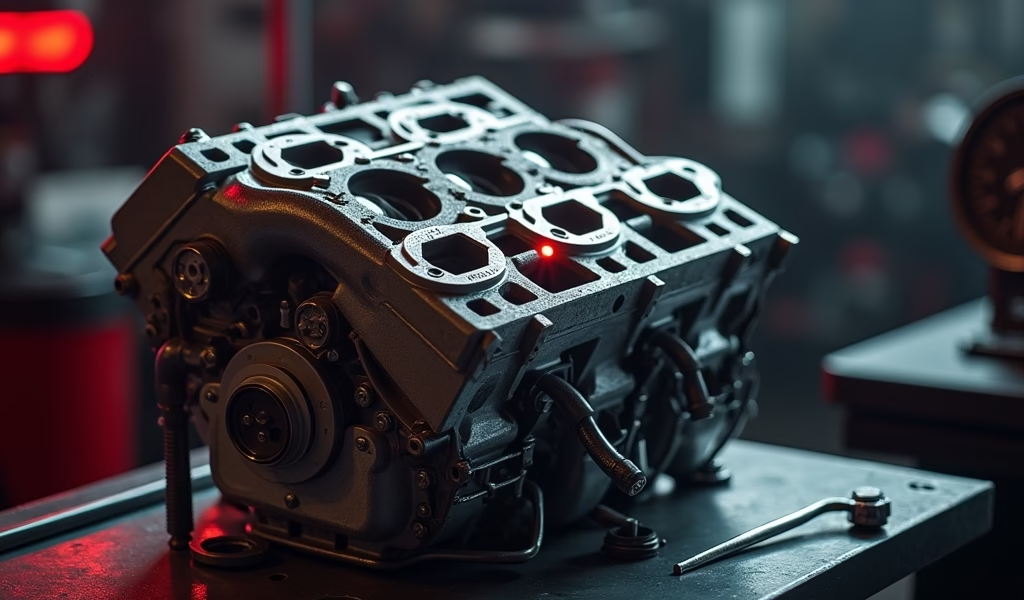
Before we pop the hood on performance improvements, let’s understand what makes these engines special. A 6-cylinder engine contains – you guessed it – six cylinders where controlled explosions convert fuel and air into mechanical energy. Each cylinder houses a piston that moves up and down, working together to create the power that moves your vehicle.
These engines typically come in three configurations:
Inline-6 (Straight-6): All cylinders arranged in a single line. Brands like BMW and Mercedes love this layout because it’s naturally balanced, providing silky-smooth operation. Think of it as the mechanical equivalent of a perfectly balanced tire.
V6: Cylinders arranged in a “V” formation with three on each side. This more compact design fits into smaller engine bays while delivering impressive power. Most modern 6-cylinder cars use this configuration.
Flat-6 (Boxer): Cylinders lie horizontally opposed to each other. Porsche and Subaru champion this design for its low center of gravity and excellent balance. It’s less common but has devoted fans.
Six-cylinder engines strike that perfect Goldilocks zone – more powerful than four-cylinders yet more economical than eight-cylinders. They deliver a pleasant, refined driving experience that’s hard to match, which is why they’re found in everything from family sedans to luxury sports cars.
Understanding how a car engine works at its fundamental level helps appreciate why these maintenance tips matter so much. Now, let’s dive into keeping your six-cylinder singing sweetly.
Essential Maintenance: The Foundation of Performance
Just like you wouldn’t run a marathon without tying your shoelaces, don’t expect peak performance from your 6-cylinder without nailing these basics:
Oil Changes: Your engine’s lifeblood deserves regular refreshing. For most 6-cylinder engines, changing oil every 5,000-7,500 miles keeps internal components happy. Modern synthetic oils cost more upfront but pay dividends in engine protection and longevity.
Oil quality matters tremendously in six-cylinder engines because they often run hotter than four-cylinders. The temperature difference between cylinders can be significant, especially in V6 configurations. Using high-quality synthetic oil with the right viscosity helps maintain consistent lubrication across all cylinders.
Air Filters: If your engine can’t breathe properly, it can’t perform properly. A clogged air filter can rob your six-cylinder of up to 10% of its power and fuel efficiency. Check yours every 15,000 miles and replace as needed – more frequently if you drive in dusty conditions.
Spark Plugs: These tiny firemakers ignite the air-fuel mixture in your cylinders. In most modern 6-cylinder engines, they’ll last 60,000-100,000 miles, but checking them around 30,000 miles keeps performance optimal. Upgrade to iridium or platinum plugs for better ignition and longevity.
Many drivers don’t realize that spark plug condition affects each cylinder differently. A single failing plug means one-sixth of your engine isn’t performing properly – that’s a significant power loss you’ll definitely feel. According to NGK Spark Plugs, warning signs include rough idling, misfires, and difficulty starting.
Treatment #1: Optimized Fuel Management
Your 6-cylinder’s performance hinges on how efficiently it uses fuel. Let’s optimize this critical system:
Premium Fuel Considerations: That higher-octane fuel isn’t just a status symbol. If your owner’s manual recommends premium (usually 91-93 octane), there’s good reason. Modern 6-cylinder engines, especially turbocharged ones, are tuned to exploit premium fuel’s resistance to pre-ignition.
However, if your vehicle doesn’t specify premium, save your money. The performance benefit will be minimal to non-existent. I’ve seen countless customers waste thousands on premium fuel for engines designed for regular gas.
Fuel System Cleaning: Over time, fuel injectors develop deposits that disrupt spray patterns, resulting in uneven combustion. Every 30,000 miles, consider a professional fuel system cleaning or quality fuel system cleaner. The difference can be remarkable – especially in direct-injection engines where carbon buildup is a common issue.
For direct-injection 6-cylinder engines (increasingly common in modern vehicles), cleaning is particularly valuable since fuel never washes over the intake valves. This research from SAE International shows that carbon buildup can reduce power by up to 5% and increase fuel consumption.
Effective Fuel Additives: Not all fuel additives are snake oil. Products containing PEA (Polyetheramine) cleaners can remove stubborn carbon deposits from intake valves and combustion chambers. Using them every 5,000 miles can maintain efficiency and prevent power loss.
In my shop, I’ve seen dramatic before-and-after differences in combustion chamber cleanliness. A clean engine is a happy, efficient engine – especially important with the sophisticated timing and fuel delivery systems in modern six-cylinders.
Treatment #2: Enhanced Breathing
If human athletes optimize their breathing for better performance, your mechanical athlete deserves the same consideration:
Air Intake Upgrades: Factory air intake systems prioritize noise suppression over maximum airflow. Aftermarket cold air intake systems deliver cooler, denser air to your engine while reducing restriction. The result? Better throttle response and a more engaging engine note.
On naturally aspirated 6-cylinder engines, expect modest power gains of 5-15 horsepower; turbocharged engines might see more significant benefits. The improvement in throttle response often feels more substantial than dyno numbers suggest – your engine simply feels more eager to rev.
Exhaust System Modifications: Factory exhaust systems are often restrictive by design. Upgrading to a performance exhaust reduces backpressure and improves exhaust flow. Besides potential power gains of 5-20 horsepower, you’ll enjoy a more authoritative exhaust note that enhances the driving experience.
Finding the Sweet Spot: While enhanced breathing benefits performance, balance is crucial. Too little backpressure can actually hurt low-end torque in cars. And while some owners love announcing their arrival from three blocks away, not everyone appreciates an overly loud exhaust at 6 AM.
Choose systems designed specifically for your engine type. The best upgrades complement your engine’s design rather than fighting against it. I recommend speaking with specialists who understand your specific model’s characteristics.
Treatment #3: ECU Tuning
Modern 6-cylinder engines are as much about software as hardware. The Electronic Control Unit (ECU) is your engine’s brain, and like any brain, it can learn new tricks:
Understanding ECU Tuning: Factory ECU programming balances performance, fuel economy, emissions compliance, and reliability – with heavy emphasis on the latter three. This often leaves performance potential untapped. ECU tuning recalibrates parameters like air-fuel ratios, ignition timing, boost pressure (in turbocharged engines), and rev limits to unlock this hidden potential.
Tuning Options: The tuning landscape offers several paths:
- Plug-and-play tuners: These devices connect to your OBD-II port and upload pre-configured tunes. They’re simple to use but offer less customization.
- Flash tuning: Specialized shops can rewrite your ECU’s programming completely. This offers better customization but requires expert knowledge.
- Piggyback systems: These devices intercept and modify sensor signals before they reach the ECU, effectively tricking it into delivering more performance.
Learning how to tune a car engine properly takes years of experience, but the results can transform your driving experience. Modern engine management systems are incredibly sophisticated, with thousands of parameters controlling everything from throttle response to shift points.
Realistic Expectations: While some manufacturers’ claims might have you believing your family sedan will transform into a supercar, reality is more modest. Expect power gains of 10-15% on naturally aspirated engines and potentially 15-25% on turbocharged 6-cylinders.
The most noticeable improvements often come in driveability – smoother power delivery, better throttle response, and elimination of flat spots in the power band. It’s less about adding massive power and more about making existing power more accessible and enjoyable.
Treatment #4: Cooling System Upgrades
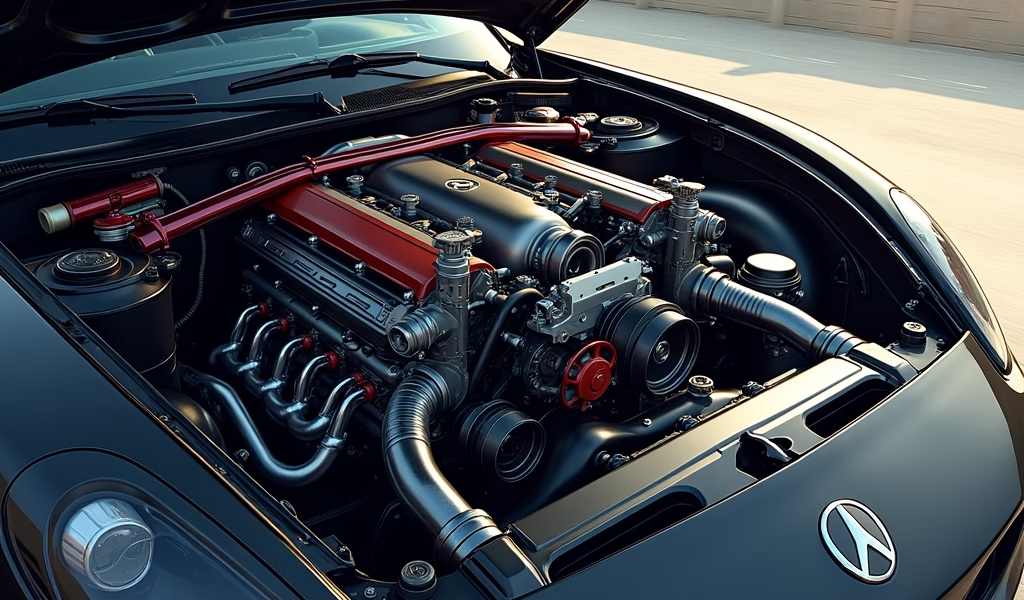
Heat is the mortal enemy of performance. Like a marathon runner in the Sahara, your engine can’t perform at its best when overheating:
Temperature Management: Six-cylinder engines generate more heat than four-cylinder counterparts simply because there’s more combustion happening. Ensuring optimal operating temperature is crucial for both performance and longevity. Modern engines run hot by design (usually around 195-220°F) for efficiency, but exceeding these temperatures quickly leads to reduced power and potential damage.
Cooling System Maintenance: Before considering upgrades, ensure your basic cooling system is in top shape:
- Replace coolant every 30,000-60,000 miles
- Inspect hoses and connections for leaks or deterioration
- Test your thermostat’s operation
- Ensure radiator fans function correctly
- Consider a radiator flush to remove built-up scale and deposits
Worthwhile Upgrades: If your 6-cylinder engine regularly runs hot during spirited driving or in warm climates, consider these upgrades:
- High-capacity radiators: These provide more surface area for heat dissipation.
- Performance water pumps: These increase coolant flow rate, improving heat transfer.
- Silicone hoses and clamps: More durable than factory rubber hoses, they maintain integrity under higher temperatures.
- Oil coolers: Particularly valuable for turbocharged 6-cylinders, these help maintain optimal oil temperature.
Think of cooling system upgrades as giving your engine better climate control – they won’t directly add power, but they create conditions where maximum power can be safely sustained. I’ve seen numerous high-performance engines saved from expensive repair bills by timely cooling system upgrades.
Treatment #5: Drivetrain Optimization
All the engine performance in the world means nothing if that power doesn’t efficiently reach the ground. Your drivetrain – the components transferring power from the engine to the wheels – deserves attention too:
Transmission Maintenance: Whether automatic or manual, transmissions benefit from regular fluid changes – generally every 30,000-60,000 miles. For automatic transmissions, consider a transmission cooler if you frequently tow or drive aggressively. Manual transmissions can benefit from synthetic transmission fluid, which offers better shift feel and protection.
Modern six-cylinder vehicles often pair with sophisticated transmissions having 8, 9, or even 10 speeds. These complex units require meticulous maintenance to maintain their precise shifting patterns and efficiency. Don’t cut corners here – transmission repairs are among the most expensive in any vehicle.
Clutch Upgrades (for manual transmissions): If you’ve increased your engine’s power, your stock clutch might start slipping under hard acceleration. Performance clutch kits offer stronger clamping force and more durable friction materials. The trade-off is often a heavier pedal feel and potentially more aggressive engagement, so choose wisely based on your driving style.
Differential Optimization: Your differential distributes power to the wheels and can significantly impact how your car puts power down. Limited-slip differentials improve traction by transferring power to the wheel with more grip – particularly valuable in high-performance 6-cylinder applications. Even simply changing to high-quality differential fluid can improve efficiency and reduce operating temperatures.
Remember that drivetrain modifications should be approached holistically – upgrading one component often reveals the next weakest link in the chain. I always recommend planning a complete upgrade path rather than addressing issues piecemeal.
Conclusion
Like a well-conducted orchestra, a properly maintained and optimized 6-cylinder engine delivers a perfect harmony of power, efficiency, and reliability. The five treatments we’ve explored work together to elevate your driving experience without sacrificing the dependability these engines are known for.
In my decades as a technician, I’ve seen remarkable transformations in 6-cylinder cars through thoughtful, systematic improvements. The beauty of these engines lies in their versatility – with proper care, they can deliver thrilling performance while remaining practical daily drivers.
Remember that more aggressive modifications typically come with trade-offs in longevity, comfort, or daily usability. Always consult your vehicle’s manufacturer recommendations before making significant changes, and consider working with reputable professionals who understand your specific engine’s characteristics.
Your 6-cylinder car represents a brilliant compromise between efficiency and performance. With these treatments, you’re not just maintaining that balance – you’re enhancing it, creating a driving experience that puts a smile on your face every time you press the accelerator.
Frequently Asked Questions
Are 6-cylinder engines more reliable than 4-cylinder engines?
Not necessarily, as reliability depends more on design, manufacturing quality, and maintenance than cylinder count. However, 6-cylinder engines often operate with less stress than 4-cylinders producing the same power, which can contribute to longevity.
Do 6-cylinder cars use significantly more fuel than 4-cylinder models?
Generally yes, but the gap has narrowed with modern technology like turbocharging and direct injection. A well-maintained 6-cylinder can sometimes achieve fuel economy close to that of an older or poorly maintained 4-cylinder.
How much more expensive is it to maintain a 6-cylinder versus a 4-cylinder?
Maintenance costs are typically 20-30% higher due to additional spark plugs, more oil, and larger cooling systems. However, the difference varies widely depending on the specific make and model.
Can I convert my 4-cylinder car to a 6-cylinder?
While technically possible, it’s rarely practical due to the extensive modifications required to the engine bay, drivetrain, cooling system, and electronics. The cost and complexity make it impractical for most vehicles.
How can I tell if my car has a 6-cylinder engine?
Check your owner’s manual or look for engine designations like “V6” or “I6” on your vehicle. You can also count the spark plug wires or coil packs visible when you open the hood, though this can be difficult with modern covered engines.