
Overview
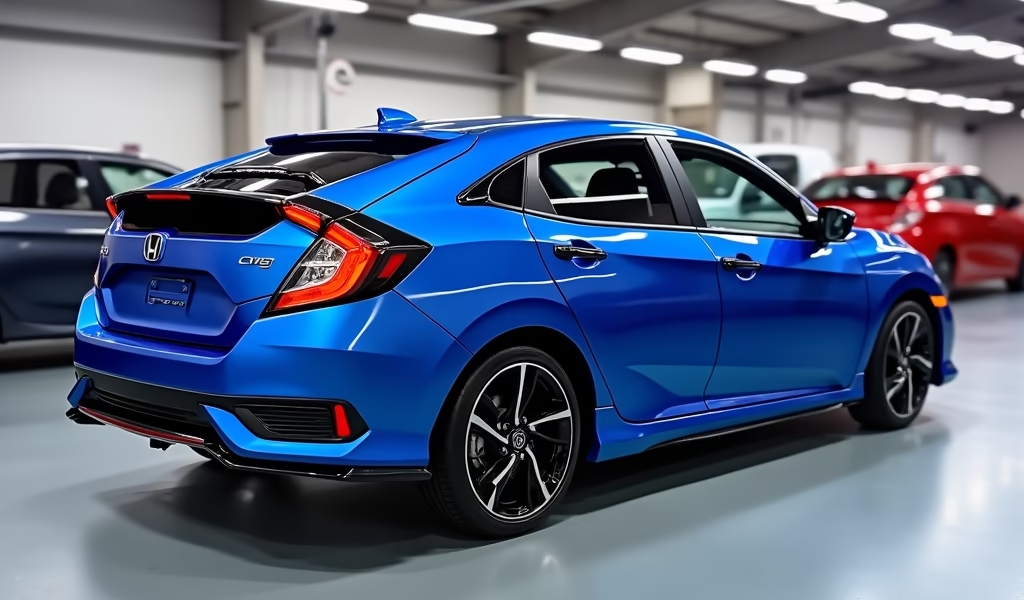
The article provides seven essential maintenance tips for 2022 Honda Civic Sport owners, covering oil changes, tire care, brake maintenance, fluid checks, air filter replacement, battery care, and tech system updates. Following these specific guidelines can help owners maintain their vehicle’s performance, prevent costly repairs, and extend the car’s lifespan to potentially 200,000+ miles.
Table of Contents
- Introduction to the 2022 Honda Civic Sport
- 1. Regular Oil Changes: The Lifeblood of Your Civic
- 2. Tire Maintenance: Where the Rubber Meets the Road
- 3. Brake System Care: Stop Problems Before They Start
- 4. Fluid Checks: Keeping Your Civic’s Systems Flowing
- 5. Air Filter Replacement: Let Your Civic Breathe
- 6. Battery Care: Power Preservation Tactics
- 7. Tech Systems: Maintaining Your Civic’s Modern Features
- Conclusion
- Frequently Asked Questions
Introduction to the 2022 Honda Civic Sport
Have you ever felt that special connection with your car? That’s how most 2022 Honda Civic Sport owners feel about their sleek, responsive rides. As someone who’s had grease under my fingernails for over two decades, I’ve seen these beauties both purring like kittens and, sadly, limping into the shop with preventable issues.
The 2022 Honda Civic Sport isn’t just another sedan – it’s the 11th generation of Honda’s flagship model, boasting a 158-horsepower 2.0L engine that’s as spirited as it is efficient. But here’s the thing: even the most reliable cars need proper care. Think of your Civic like a star athlete – even natural talent needs consistent training to perform at its peak.
I’ve compiled these 7 maintenance tips specifically for the 2022 Honda Civic Sport after working with dozens of these models. These aren’t your generic “check your oil” suggestions – these are targeted recommendations based on this specific model’s quirks and needs. Follow them, and your Civic might just outlast your patience with my dad jokes throughout this article.
Let’s roll up our sleeves and get into what makes these affordable and reliable cars tick – and how to keep yours ticking for years to come.
1. Regular Oil Changes: The Lifeblood of Your Civic
Your 2022 Honda Civic Sport’s engine is like your heart – and oil is its blood. Skip oil changes at your own peril, my friends. Honda recommends synthetic oil changes every 7,500-10,000 miles, but here’s my professional advice: with the Civic Sport’s more performance-oriented tuning, I suggest every 5,000-7,500 miles instead.
Why the difference? The Sport trim’s more aggressive driving profile means the oil works harder. I’ve seen too many Civic owners stretch those intervals only to find metal particles in their oil – the automotive equivalent of finding out your dinner’s been seasoned with glass shards.
When changing your oil, always use Honda-recommended 0W-20 synthetic. Yes, it costs more than conventional oil, but it’s like choosing between a cashmere sweater and sandpaper when it comes to how it treats your engine. The maintenance minder system will remind you when it’s time, but don’t ignore these signs that you need an immediate oil change:
- Oil warning light illumination (this is basically your Civic screaming for help)
- Engine running louder than usual (that’s metal-on-metal contact – yikes!)
- Dark, gritty oil on the dipstick (oil should be amber, not coal)
- Decreased fuel efficiency (your Civic’s passive-aggressive way of complaining)
Remember, according to Honda’s official warranty, skipping scheduled maintenance can void parts of your coverage. An oil change costs about $50-70 – a blown engine starts around $4,000. I’m not great at math, but even I can figure out which is the better deal.
2. Tire Maintenance: Where the Rubber Meets the Road
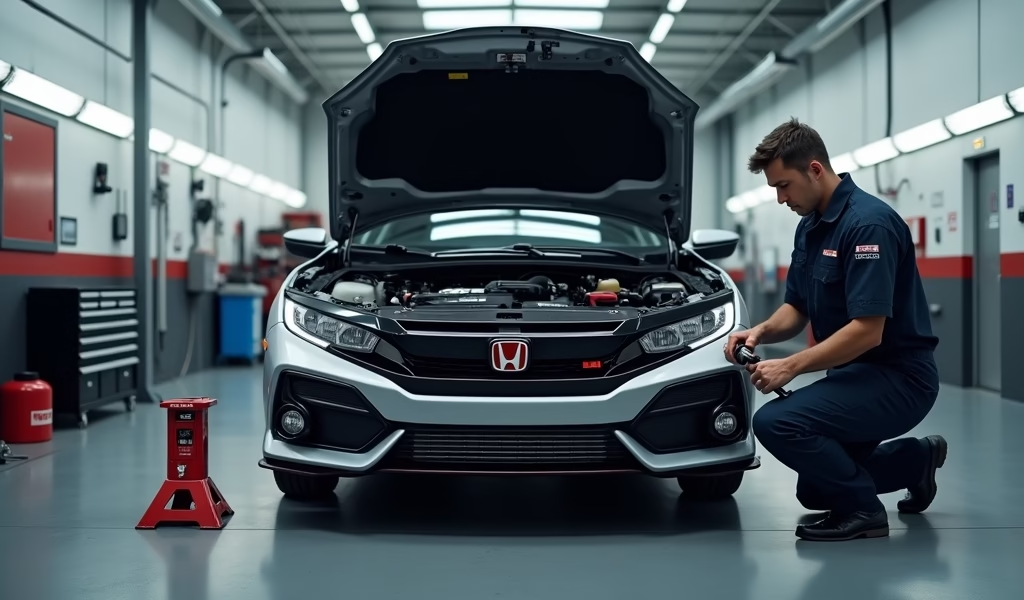
The stock 18-inch alloys on your 2022 Honda Civic Sport come wrapped in 235/40R18 all-season tires – pretty sporty for a non-Si model. But those wider, lower-profile tires need special attention. Think of them as specialized running shoes rather than all-purpose sneakers.
First thing’s first: pressure checks. The Civic Sport’s recommended tire pressure is 32 PSI front and rear. Check monthly, not yearly (and definitely not just when they look flat – by then, you’ve already started causing damage). Temperature changes of just 10°F can change pressure by 1 PSI, so those seasonal swings matter more than you might think.
Rotation is crucial for these tires. The Civic Sport has a front-wheel-drive layout with most of the weight over the front axle, meaning those front tires work overtime. I’ve seen Civic owners with front tires worn to the cords while the rears still look nearly new – a costly mistake! Rotate every 5,000-7,500 miles, coinciding with your oil changes for simplicity.
Here’s a quick maintenance schedule to keep those tires in top shape:
- Monthly: Check pressure when tires are cold, inspect for damage or unusual wear
- Every 5,000-7,500 miles: Rotation and balance check
- Every 15,000 miles: Alignment check (sooner if you notice pulling or uneven wear)
- Every 40,000-50,000 miles: Full replacement (depends on driving conditions and habits)
One Civic Sport-specific tip: watch for curb rash on those stylish but vulnerable rims. The low-profile tires don’t provide much cushion, and replacement rims will set you back about $300-500 each. When parallel parking, get into the habit of stopping before your tires touch the curb – your wheels and wallet will thank you.
3. Brake System Care: Stop Problems Before They Start
Your 2022 Honda Civic Sport comes with solid disc brakes all around – 11.1-inch ventilated discs up front and 10.2-inch solid discs in the rear. Not too shabby! But let me tell you, I’ve seen more avoidable brake issues than I care to count.
The biggest mistake? Ignoring the early warning signs. Your Civic isn’t subtle about brake problems. If you hear squealing, grinding, or feel vibration during braking, your car is essentially sending you a text message saying “FIX ME NOW!” Ignore these signals, and you’ll graduate from replacing $100 brake pads to resurfacing or replacing $300+ rotors.
For the 2022 Civic Sport specifically, here’s what to watch for:
- Brake pad replacement typically needed around 40,000-60,000 miles (but can vary wildly based on driving style)
- Brake fluid flush recommended every 3 years regardless of mileage (the fluid is hygroscopic, meaning it absorbs moisture over time)
- Calipers should be lubricated during pad replacements to prevent sticking
One quirk of the Civic Sport worth mentioning: its sportier suspension setup and lower-profile tires mean you’ll feel more road imperfections through the steering wheel. Don’t mistake normal feedback for brake rotor issues. True rotor problems cause pulsing specifically during braking, not just while driving.
If you’re the DIY type, brake pad replacement on the 2022 Civic is relatively straightforward. Professional mechanics recommend always replacing pads in complete axle sets (both front or both rear) and checking the condition of your brake fluid while you’re at it. A proper brake job takes about 1-2 hours per axle – rushing it isn’t worth the risk.
4. Fluid Checks: Keeping Your Civic’s Systems Flowing
Your 2022 Honda Civic Sport is a symphony of moving parts, and fluids are the conductors keeping everything in harmony. Missing fluid checks is like ignoring your body’s need for water – things go south quickly.
Let’s break down the crucial fluids beyond just oil:
- Transmission fluid: The CVT in your Civic Sport uses specific Honda HCF-2 fluid. Check it with the engine warm and running, parked on level ground. Unlike older models, the 2022 doesn’t have a traditional dipstick – you’ll need to check the overflow reservoir. Replacement interval: rarely needed before 60,000 miles unless there’s a problem.
- Coolant: Your Civic uses Honda Long-Life Antifreeze/Coolant Type 2. Check the reservoir monthly when cold and ensure it’s between the MIN and MAX lines. Replacement: first at 120,000 miles, then every 60,000 miles.
- Brake fluid: Should be clear with a slight amber tint. If it’s dark brown or black, it’s contaminated and needs replacement. Check the reservoir monthly and replace every 3 years.
- Power steering fluid: Good news! The 2022 Civic uses electric power steering, so there’s no fluid to worry about.
Here’s a pro tip that’s saved many of my customers headaches: Keep a maintenance journal in your glove compartment. Each time you check or replace fluids, note the date, mileage, and condition. It takes 30 seconds but provides invaluable tracking of your car’s health patterns.
I had a customer who swore his Civic was losing coolant, but his journal showed the level had been consistent for months – turned out, he was just checking it when the engine was hot versus cold, causing the appearance of a problem. Simple oversight, easy fix.
When it comes to buying used vehicles in the future, a detailed maintenance journal can add hundreds to your car’s resale value by demonstrating your attentiveness.
5. Air Filter Replacement: Let Your Civic Breathe
Your 2022 Honda Civic Sport needs clean air as much as you do. The engine air filter is like the car’s lungs, and the cabin air filter is like your personal air purifier. Neglect either, and performance suffers – both for your car and your sinuses.
The engine air filter in the Civic Sport is surprisingly easy to check and replace. It’s located in a black plastic housing on the driver’s side of the engine bay. Pop the clips, lift the cover, and there it is – no tools required. A clean filter should be white or off-white; if it’s gray, brown, or black, it’s time for a change.
Replacement intervals depend on your driving environment:
- Normal conditions: Every 15,000-30,000 miles
- Dusty or polluted areas: As frequently as every 10,000 miles
- Visual check: At least once a year regardless of mileage
The cabin air filter hides behind your glove box. While Honda suggests replacement every 15,000-30,000 miles, I recommend checking it twice a year – once in spring and once in fall. Why? Because pollen season can clog it quickly, and a clogged cabin filter not only reduces air quality but can strain your HVAC blower motor. When your A/C starts blowing with all the force of an asthmatic ant, that’s usually the culprit.
A genuine Honda engine air filter runs about $20-30, while the cabin filter costs around $15-25. Aftermarket options are available for less, but be wary of ultra-cheap filters that can shed fibers into your engine or cabin. A quality filter is worth the minor price difference – it’s the difference between breathing through a clean cotton mask versus a paper towel.
According to EPA research, indoor air quality (including your car’s cabin) can significantly impact health. Since Americans spend an average of 293 hours per year in their cars, that clean cabin filter is more important than you might think!
6. Battery Care: Power Preservation Tactics
The 2022 Honda Civic Sport comes with a 12V battery that seems simple but can cause complex problems if neglected. Ever had that moment of turning your key (or pressing the start button) and hearing…nothing? That sinking feeling in your stomach is preventable with some basic battery maintenance.
Your Civic’s battery should last about 3-5 years, but I’ve seen them fail in as little as 18 months due to extreme weather conditions or short-trip driving habits. The battery in the Civic Sport is located on the driver’s side of the engine compartment, tucked behind the headlight assembly.
Here’s how to extend your battery’s lifespan:
- Check for corrosion on terminals monthly (look for white, green, or blue crusty deposits)
- Clean terminals with a wire brush and baking soda solution if corrosion appears
- Ensure the battery is securely mounted – vibration is a battery killer
- If you primarily drive short trips (under 15 minutes), take a longer drive weekly to fully charge the battery
One Civic-specific quirk: these models have numerous electronic systems that create a constant small drain on the battery. If you’ll park your car for more than two weeks, consider using a battery tender to maintain charge. A quality battery tender costs about $40-60 – far cheaper than a tow truck and replacement battery.
Speaking of replacement, when it is time for a new battery, don’t automatically go for the cheapest option. The Civic Sport works best with at least a Group 51R battery with a minimum of 500 CCA (Cold Cranking Amps). In hot climates, look for batteries specifically designed with heat resistance; in cold areas, maximize those CCA ratings.
I had one customer who replaced his battery with an undersized economy option to save $30, only to have it fail during a cold snap three months later. The tow alone cost more than he’d “saved” – not to mention the embarrassment of missing an important meeting.
Considering whether to lease or buy your next vehicle? Remember that proper battery maintenance applies either way, but leased vehicles usually don’t need battery replacement during the lease term if properly maintained.
7. Tech Systems: Maintaining Your Civic’s Modern Features
The 2022 Honda Civic Sport isn’t just an engine with wheels – it’s practically a computer on wheels. From the 7-inch touchscreen infotainment system (9-inch if you splurged for the Touring) to the Honda Sensing safety suite, there’s a lot of tech that needs attention beyond mechanical maintenance.
First, let’s talk about software updates. Unlike Civics of yesteryear, your 2022 model occasionally needs its computers updated. These updates can improve performance, fix bugs, or add features. Honda sometimes sends notices about important updates, but not always. Check for updates at every service, or at minimum twice yearly.
For DIY-minded folks, you can check for infotainment updates through the settings menu or via the HondaLink app. Some updates can be downloaded via Wi-Fi, while others require a dealer visit. Trust me, ignoring these updates is like never updating your smartphone – eventually, things get weird.
Next, calibration of driver-assistance systems. Your Civic Sport’s Honda Sensing suite includes:
- Collision Mitigation Braking System
- Road Departure Mitigation
- Adaptive Cruise Control
- Lane Keeping Assist
These systems rely on cameras and sensors that can get misaligned over time, especially after impacts (even minor ones like curb strikes). If you notice the lane-keeping feature acting erratically or adaptive cruise control behaving inconsistently, it might need recalibration. This usually requires dealer equipment, though some independent shops are now equipped for this service.
One often overlooked aspect: keeping sensors clean. The front Honda logo hides radar sensors for adaptive cruise and collision mitigation. If it gets covered in mud, ice, or even too many squashed bugs, performance degrades. Same goes for the camera mounted near the rearview mirror – a grimy windshield can blind your car’s electronic “eyes.”
Finally, don’t ignore warning lights related to these systems. The “BRAKE” warning or an orange car-shaped light with an exclamation mark isn’t something to cover with electrical tape and forget. These warnings indicate system failures that could compromise safety features you’re counting on in an emergency.
Conclusion
Owning a 2022 Honda Civic Sport is a relationship – it’ll take care of you if you take care of it first. These seven maintenance areas aren’t just arbitrary suggestions; they’re the result of seeing what actually goes wrong with these specific models in real-world conditions.
Remember, preventative maintenance always costs less than reactive repairs. That $50 oil change seems expensive until you’re staring at a $4,000 engine rebuild invoice. Those $200 brake pads feel pricey until you’re adding $600 rotors to the bill because you waited too long.
Your Civic Sport is engineered to last 200,000+ miles with proper care. I’ve seen enough high-mileage Hondas to know this isn’t marketing hype – it’s entirely achievable if you follow these guidelines. The 11th generation Civic represents decades of Honda refinement, and it’s built to be reliable.
So check those fluids, listen for unusual sounds, follow your maintenance schedule, and your 2022 Civic Sport will reward you with years of that special Honda driving experience – the perfect blend of efficiency, sportiness, and reliability that’s made the Civic a perennial bestseller.
Now go give your car the TLC it deserves – and maybe a wash while you’re at it. Even mechanics appreciate a clean patient.
Frequently Asked Questions
How often should I change the oil in my 2022 Honda Civic Sport?
Every 5,000-7,500 miles is ideal for the Civic Sport, slightly more frequently than Honda’s maximum recommendation of 10,000 miles. The Sport trim’s more performance-oriented tuning means the oil works harder than in standard Civic models.
What kind of gas should I use in the 2022 Honda Civic Sport?
Regular unleaded gasoline (87 octane) is perfectly fine for the 2022 Civic Sport’s 2.0L engine. Premium fuel provides no performance or efficiency benefits and is an unnecessary expense.
How long do the brakes last on a 2022 Honda Civic Sport?
Brake pads typically last 40,000-60,000 miles depending on driving habits and conditions. Highway drivers may get even longer life, while city drivers with frequent stops might need replacement sooner.
When should I replace the tires on my 2022 Honda Civic Sport?
The stock tires should last approximately 40,000-50,000 miles with proper rotation and inflation. Replace them when tread depth reaches 4/32″ (winter driving) or 2/32″ (minimum legal depth), or if sidewall damage occurs.
Does the 2022 Honda Civic Sport need synthetic oil?
Yes, Honda specifically recommends 0W-20 synthetic oil for the 2022 Civic Sport. Conventional oil doesn’t provide the same level of protection and could potentially affect your warranty coverage.