
Overview
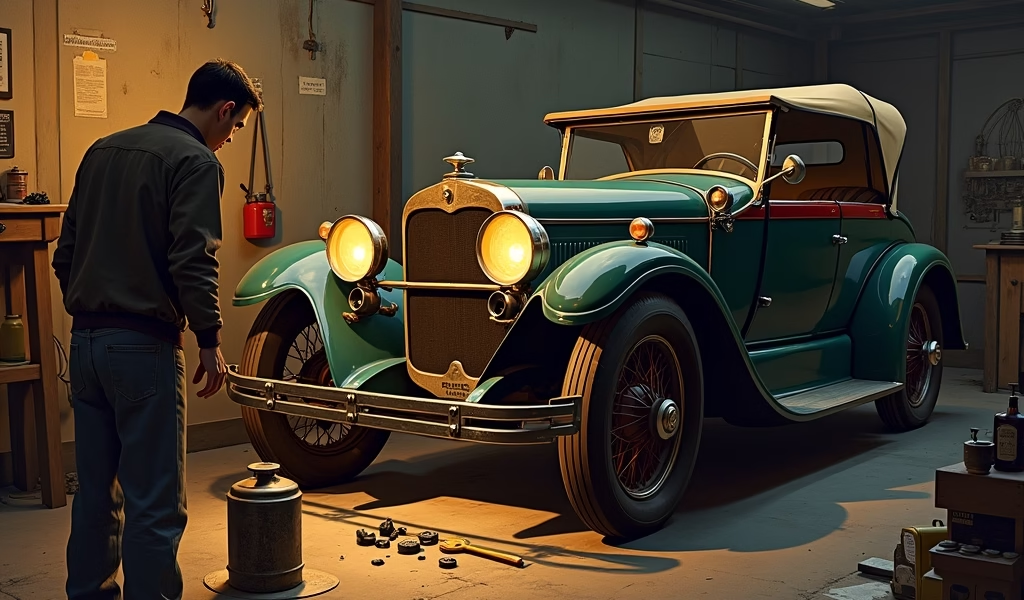
If you thought your modern car was high-maintenance, try babysitting a centenarian on wheels! This article details five essential maintenance hacks for 1900s cars, including regular oil changes, proper tire care, battery preservation, cooling system vigilance, and DIY maintenance skills, all aimed at preventing costly repairs while preserving these irreplaceable pieces of automotive history.
Table of Contents
- Introduction to 1900 Cars: A Trip Down Memory Lane
- Hack #1: Regular Oil Changes – The Lifeblood of Your Vintage Engine
- Hack #2: Proper Tire Maintenance for Antique Wheels
- Hack #3: Battery Care and Preservation Techniques
- Hack #4: Cooling System Vigilance for Vintage Vehicles
- Hack #5: DIY Maintenance Skills Worth Mastering
- Conclusion: Preserving Automotive History Through Smart Maintenance
- Frequently Asked Questions
Introduction to 1900 Cars: A Trip Down Memory Lane
The dawn of the 20th century marked a revolutionary era for transportation, with 1900 cars representing the pioneers of automotive engineering. These magnificent machines weren’t just vehicles; they were masterpieces of innovation that laid the groundwork for modern transportation as we know it. As a mechanic who’s spent decades working with vintage automobiles, I’ve developed a profound appreciation for these early horseless carriages and their ingenious, albeit simple, mechanical systems.
Owners of these century-old treasures understand that preserving automotive history comes with unique challenges. Unlike modern vehicles with computerized diagnostics, 1900 cars demand hands-on knowledge and preventative care. The good news? Many common repairs can be avoided with proper maintenance—saving you thousands while preserving your investment.
In my 35 years working with antique vehicles, I’ve discovered that most catastrophic failures don’t happen overnight. They develop gradually, giving attentive owners plenty of warning signs. Today, I’ll share five proven maintenance hacks specifically for 1900 cars that can dramatically reduce your repair bills while keeping these historical gems roadworthy for generations to come.
Hack #1: Regular Oil Changes – The Lifeblood of Your Vintage Engine
The engines in 1900 cars operate on fundamentally simple principles compared to modern vehicles. However, this simplicity doesn’t diminish their need for proper lubrication. In fact, these vintage engines often demand more frequent oil maintenance due to their looser tolerances and primitive filtration systems.
For 1900-era vehicles, I recommend changing the oil every 500 miles or at least twice annually, even with minimal driving. These early engines typically used straight mineral oils without modern additives, and replicating this with appropriate modern equivalents is crucial. For most early vehicles, a non-detergent SAE 30 or 40 oil works well, though this can vary by make and model.
When performing oil changes on these vintage machines, take time to inspect the consistency of the old oil. Black oil is normal, but metal flakes, milky appearance, or gritty texture indicates potential problems brewing within your engine. These early warning signs can save you from catastrophic engine failures that might cost thousands to repair.
Here’s my step-by-step approach to a proper vintage oil change:
- Warm the engine for 5-10 minutes to ensure oil flows freely
- Place a period-appropriate drain pan beneath the oil pan
- Carefully remove the drain plug (often these are original and easily damaged)
- While draining, remove and inspect the oil fill cap for sludge buildup
- Replace the drain plug with a new copper washer if needed
- Fill with appropriate non-detergent oil to manufacturer specifications
- Hand-crank or briefly run the engine to circulate fresh oil
- Check for leaks and proper oil pressure
Remember, the lubrication systems in these early automobiles often relied on splash or gravity-feed methods rather than pressurized systems. According to research from Hemmings Motor News, most engine failures in brass-era cars stem from inadequate lubrication, making this perhaps the most crucial maintenance task for your vintage vehicle.
Hack #2: Proper Tire Maintenance for Antique Wheels
Tire technology in 1900 cars bears little resemblance to modern pneumatic tires. Many early automobiles utilized solid rubber tires, while others featured primitive pneumatic designs that lacked today’s reinforcement and tread patterns. Proper maintenance of these vintage tires is not only essential for safety but can prevent damage to irreplaceable wheels and suspension components.
For vehicles with early pneumatic tires, maintaining correct pressure is critical yet challenging. These tires typically require much lower pressure than modern equivalents—often between 40-60 psi depending on the specific vehicle. I strongly recommend investing in a period-correct pressure gauge calibrated for these ranges, as modern gauges may not provide accurate readings at these lower pressures.
Storage practices dramatically impact the longevity of antique tires. When storing your 1900 car for extended periods (which is common for these collector vehicles), follow these specialized techniques:
- Elevate the vehicle on jack stands to remove weight from the tires
- Keep tires inflated to approximately 75% of normal driving pressure
- Cover tires to protect from direct sunlight and ozone exposure
- Rotate the wheels quarterly to prevent flat-spotting
- Apply a rubber preservative specifically formulated for vintage rubber
Replacing tires on 1900 cars presents unique challenges, as these sizes are no longer mass-produced. Companies specializing in vintage tire reproduction often charge premium prices, with a set potentially costing upwards of $2,000. However, through proper maintenance, I’ve helped collectors extend tire life by 10+ years, representing significant savings.
For solid rubber tires, regularly inspect for cracking and separation from the wheel. These issues require immediate attention, as failure while driving can damage irreplaceable wooden or wire wheels. Organizations like the Horseless Carriage Club of America maintain directories of specialized tire restorers who can refurbish rather than replace these expensive components.
Hack #3: Battery Care and Preservation Techniques
Many 1900 cars utilized rudimentary electrical systems for ignition, with some early models employing magnetos rather than batteries. For those equipped with period batteries, maintenance presents unique challenges. Original batteries were often lead-acid designs with glass cells—technology that’s both hazardous and inefficient by modern standards.
While maintaining authentic appearance is important for collectors, I generally recommend tasteful upgrades to battery technology for vehicles that see regular use. Modern 6-volt batteries disguised in period-correct cases provide superior reliability while preserving historical aesthetics. This approach has saved numerous clients from being stranded with dead batteries during tours and exhibitions.
For those committed to absolute authenticity, proper maintenance of original-style batteries requires vigilant attention. Check specific gravity monthly using a hydrometer, maintain proper electrolyte levels with distilled water only, and keep terminals scrupulously clean to prevent corrosion. The primitive charging systems in these vehicles often provided inconsistent charging, so supplemental charging with a modern low-amp charger designed for vintage vehicles is advisable.
Here’s my practical approach to battery preservation for 1900 cars:
- Install a discreet cutoff switch to prevent parasitic drain
- Apply dielectric grease to terminals monthly
- Maintain a trickle charge during storage periods
- Clean battery cases and surroundings to prevent acid damage
- Test voltage before each outing
For vehicles with magneto ignition, regular inspection of the points and proper timing adjustments will ensure reliable starting. Many early manual transmission vehicles can be started by hand-cranking even with a weak electrical system, but addressing electrical issues proactively prevents potential ignition failures at inconvenient moments.
Hack #4: Cooling System Vigilance for Vintage Vehicles
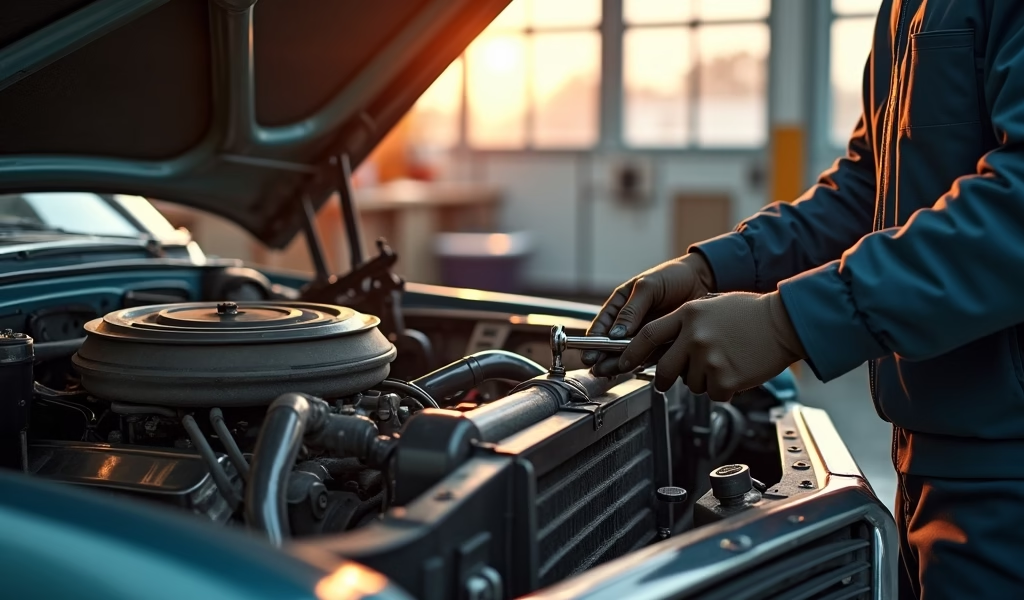
Cooling systems in 1900 cars operated on principles remarkably similar to modern vehicles, but with far less efficiency and reliability. These early cooling systems typically relied on thermo-siphon circulation rather than water pumps, making them particularly vulnerable to overheating. In my restoration shop, cooling system failures rank among the most common and costly repairs for brass-era automobiles.
The radiators in these vehicles were often constructed with soft solder joints that are prone to failure when exposed to excessive heat or improper chemicals. I’ve saved clients thousands by implementing a proactive maintenance program that emphasizes cooling system care. The cornerstone of this approach is using only appropriate coolants—typically a 50/50 mix of distilled water and a coolant specifically formulated for vintage vehicles without modern corrosion inhibitors that can damage old metals.
Seasonal flushing is essential for these primitive systems. Before the driving season, perform a complete system flush using distilled water only. Inspect rubber hoses for deterioration—these are often custom sizes but replacing them proactively costs far less than repairing a vintage radiator damaged by a blown hose. When winterizing, ensure complete drainage or appropriate antifreeze protection, as freezing can split brass radiator cores that cost $3,000+ to replicate.
Watch for these early warning signs of cooling system issues:
- Steam from under the hood before the temperature gauge shows overheating
- Coolant with rusty color or oily film
- White residue around hose connections or seams
- Fluctuating temperature readings
- Sweet smell from the radiator area
For enhanced reliability without compromising authenticity, consider carefully planned modifications like hidden supplemental electric fans for parade driving or traffic. These adaptations have proven invaluable for clients who regularly participate in tours where stop-and-go conditions might otherwise lead to overheating. The key is implementing changes that preserve the vehicle’s historical integrity while enhancing reliability.
Hack #5: DIY Maintenance Skills Worth Mastering
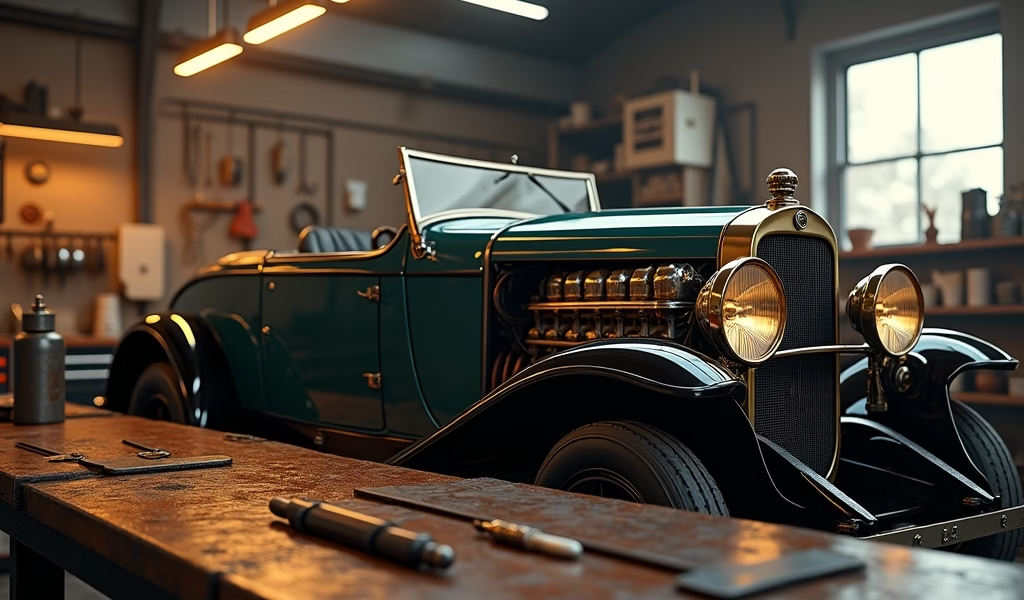
Perhaps the most significant cost-saving hack for 1900 cars owners is developing specific DIY maintenance skills. Unlike modern vehicles with complex electronics and specialized tooling requirements, these vintage machines were designed for owner serviceability. The mechanical simplicity of 1900-era automobiles makes them ideal candidates for hands-on maintenance, even for those with limited prior mechanical experience.
I always encourage my clients to master basic adjustments particular to early vehicles. Learning to properly adjust brake bands, for example, can prevent expensive damage to drums and lining materials. Similarly, understanding how to tune and adjust early carburetors like Schebler or Stromberg units can dramatically improve performance while reducing fuel consumption. These skills aren’t difficult to acquire but can save hundreds in service costs per year.
Developing a relationship with the specific engine type in your vehicle pays enormous dividends. Early engines often have quirky oiling requirements, distinctive valve adjustment procedures, and unique timing specifications. By documenting these details in a maintenance journal, you’ll develop intimate knowledge of your vehicle’s particular needs and recognize subtle changes that might indicate developing problems.
Essential DIY skills for 1900 cars owners include:
- Basic ignition timing and point gap adjustments
- Brake band inspection and adjustment
- Wheel bearing maintenance and packing
- Carburetor adjustment and cleaning
- Chain drive tensioning (for chain-driven vehicles)
- Valve adjustment and compression testing
- Wood body and wheel spoke maintenance
Investing in period-correct tools makes these tasks considerably easier. While modern tools will work in many cases, having authentic wrenches and specialty tools designed for your specific make and model enhances both the experience and results. Organizations like the Antique Automobile Club of America often host workshops where you can learn these skills from experienced restorers.
Remember that these vehicles were designed in an era when owner maintenance was expected. The engineers who created these remarkable machines intended for regular adjustments and service to be performed by the owner with basic tools. Embracing this aspect of early automobile ownership not only saves money but connects you more deeply with the historical experience of early motoring.
Conclusion: Preserving Automotive History Through Smart Maintenance
Maintaining 1900 cars requires a blend of historical knowledge, mechanical sensitivity, and preventative thinking. These automotive treasures represent more than transportation—they’re living artifacts of engineering history that deserve careful stewardship. By implementing the five maintenance hacks we’ve explored, you’re not just saving money; you’re preserving irreplaceable pieces of automotive heritage.
Regular oil changes, proper tire care, battery preservation, cooling system vigilance, and developing DIY maintenance skills form a comprehensive approach that addresses the most vulnerable aspects of these vintage machines. Each of these practices builds upon the others, creating a maintenance strategy that prevents the cascade of failures that often leads to expensive restorations.
Remember that 1900 cars were built in an era when planned obsolescence wasn’t yet a manufacturing philosophy. The engineers who designed these vehicles intended them to last for decades with proper care. By honoring their vision through meticulous maintenance, you’re participating in a tradition of craftsmanship and mechanical appreciation that spans generations.
Whether you’re a seasoned collector or new to the world of vintage automobiles, these maintenance principles will serve you well. They represent not just financial wisdom but a philosophy of stewardship that ensures these magnificent machines will continue to delight and inspire future generations of automotive enthusiasts.
Frequently Asked Questions
How often should I drive my 1900-era automobile to keep it in good condition?
Ideally, drive your vintage vehicle at least monthly for 15-20 minutes to reach operating temperature. This prevents seals from drying out and keeps mechanical components properly lubricated.
What type of fuel is best for 1900 cars?
Most 1900-era engines perform best with non-ethanol premium fuel when available. Modern ethanol blends can damage early fuel system components and lead to poor running conditions.
How do I find replacement parts for my 1900 car?
Specialist vintage automobile clubs, dedicated restoration shops, and online forums like the AACA forums are excellent resources. Many parts must be custom-fabricated by specialists who understand period-appropriate materials and techniques.
Can I convert my 1900 car’s lighting to modern systems?
Discreet upgrades to 12V LED systems inside period-correct fixtures provide safety benefits while preserving authentic appearance. The key is maintaining visual authenticity while enhancing reliability and safety.
Is it safe to drive a 1900 car on modern roads?
With proper maintenance and driver training, many 1900 cars can be operated safely on secondary roads. Consider adding subtle safety enhancements like improved brake linings and turn signals that maintain period appearance.